LEGO builds on play – and that’s why its culture endures
by Heidi Byskata | November 3, 2025
At The LEGO Foundation, play isn’t the opposite of work – it’s a leadership strategy. What began as a philosophy for children has become a blueprint for how adults learn, lead, and adapt. By treating curiosity as infrastructure, LEGO shows how culture can scale without losing its soul.
From bricks to behaviour
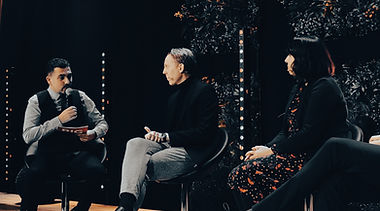
At Professio’s Strategy Talk HR 2024, Thomas Møller Jeppesen, Head of HR at The LEGO Foundation, described how “learning through play” has evolved into a management principle that fuels innovation and resilience.
The approach is deceptively simple: create conditions where people feel safe to explore, experiment and even fail. “When work becomes only about performance, people stop learning,” Jeppesen noted.
At LEGO, structured play is used to spark insight, build collaboration and strengthen emotional safety – not as entertainment, but as a system for learning at speed.
Psychological safety as a performance driver
Play demands trust. The Foundation measures and develops psychological safety with the same rigour as financial metrics. Teams are encouraged to share unfinished ideas and test assumptions early. “Play is not about ping-pong tables,” Jeppesen said. “It’s about permission – to try, to fail, and to grow.”
This mindset has made experimentation routine. When mistakes are treated as data, innovation stops being a department and becomes a habit.
Scaling curiosity across a global culture
With employees across continents and disciplines, the real challenge is scale.
The LEGO Foundation embeds play through micro-moments – short learning rituals, reflective check-ins and cross-team challenges that keep curiosity alive even under pressure.
“It’s not about adding fun to work,” Jeppesen said. “It’s about making work more human.”
Watch the full keynote here:


-2.jpg)